Posted by: patriciamar | March 26, 2016

Little Hemingway Bing

I hope you got that reference.  Did you?  Sandy?  Of course.  The rest of you?

The next spot on my list, holding strong at number somewhere, is Hemingway.  I will again be cheating and not choosing just one book, but my top 3.

For the skeptics, I didn’t choose Hemingway because I should, but because again and again I fell in love with his writing.  This sort of thing happens.

3. The Old Man and the Sea

The Old Man and The Sea interests me as both a reader and a writer.  It began as a short story, a fact I learned from reading Papa Hemingway, another book about Hemingway by Hotchner.

From what I heard/read, old papa owed a story to LIFE Magazine.   I believe the New Yorker came into play later, but this is only what I remember for now.  (Nice sources, eh?  Read Papa Hemingway!  I already told you to do so….)  Big H put it off and put it off.  He delayed and told them yes, it’s coming; it’s going to be great.  He probably even used a semicolon.

And the novella or the looong short story, “The Old Man and the Sea” was born.

This old man, what an old man!  Could life really be like that?  Could it be that rough to be old and without hope, yet so full of something that might be possible?  A very big fish.

Hemingway’s “The Old Man and the Sea” made the novella, or the uber-short story, real and possible to me.  Before reading this book, I never understood the length.  I have since come to appreciate it thoroughly.  I’ve read Steinbeck’s “The Pearl,” which is similar in it’s pessimistic aura, but with more characters, to put it very simply.

I’ve also read tons of modern novellas.  This is the next new thing, if that works in words.  Many, many modern series have 1.5 or even 0.5. There are novellas about side characters and novellas about the misunderstood mother or sometimes, the enemy.  I have even begun crafting a novella that will follow Wandering Canalside.  The working title is currently, “A Seaside Vignette.” We’ll see where that goes over the next year.
Posted by: patriciamar | March 22, 2016

A Small Rain

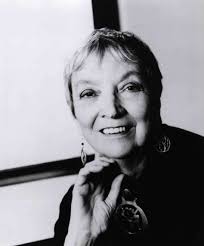
madeleine.jpg

Did you know that Madeleine L’Engle, author of “A Wrinkle in Time,” wrote other novels, not considered young adult?

L’Engle was actually one of the first authors that inspired me to write. She had complex characters and relationships, travel, academia, music, philosophy, marine biology, and oddly enough, the first lesbian I ever read about in a book. In many ways, she was far beyond her time.

“A Severed Wasp” (the book after “A Small Rain”), is one of my favorites.  Although they were not all that well-received, I also loved “Camilla,” and  “A Live Coal in the Sea-”  What a beautiful title!  “Certain Women” was also very good.

Back at the Rock County Library, originally a Andrew Carnegie endeavor, Madeleine L’Engle was the first author that I found, read, and then went back and checked out every book of.  They didn’t have Goodreads or The Internet back then, so I didn’t know how to find more, but I have spent many years exploring since then.

I enjoyed many of her young adult books as well, “A Ring of Endless Light,” being my favorite.

I have not, to be honest, read “A Wrinkle in Time.”  I should probably do that.

For tonight, perhaps a story about L’Engle, brought to you by NPR.  It was such a sad day for me when she passed away.


Posted by: patriciamar | March 15, 2016

Bryson, Bill

Books are great decoration and are great conversation pieces.

At a gathering, a room full of bookshelves is great for the introvert, the extrovert, and anyone else on the spectrum in between or outside.

Matt and I were discussing this the other day, and he mentioned how they were colorful and decorative, but also great conversation pieces. To prove his point, he picked one book at random off the shelf. It happened to be this book, which is the absolute perfect example, laughably so.

Bryson’s Dictionary for Writers and Editors is an incredibly useful book, but is also very entertaining, especially if you like random anecdotes, facts or pop culture–yes, even pop culture!

On this particular day, for example, we popped it open to a random page and picked a random entry. It was Guadalupe, Guadeloupe.

I’ll go ahead and include a segment for you here.

bill bryson


As you can imagine, this led to a near-20-minute converation.

Eventually we made it back to the original topic, even a little impressed with the depth to which the point had been made.

Besides its fun and dandy convo topic properties, this book is truly very useful for writers and editors.

Imagine that moment when you’re writing away, on a roll (or not), and you suddenly come to a name or phrase or idiom, and you think, “Which way does that go again?” “How do you spell that?” or “Is it this or that?”

I would guess that 80 percent of the time, you can grab this book and your question will be answered. Of course the internet can do the same thing, but there’s something incredibly satisfying about how often the answer appears in this Bryson book.

As an editor, it’s great for spell checking random names (particularly historical in nature).

A few examples, randomly selected (eyes closed, point finger):images
Graf, Steffi
keenness, but keenest
Muscovite for a person from Moscow. The name from the ancient principality of Muscovy.

By the way, Bill Bryson is also a great travel book writer!


Posted by: patriciamar | March 14, 2016

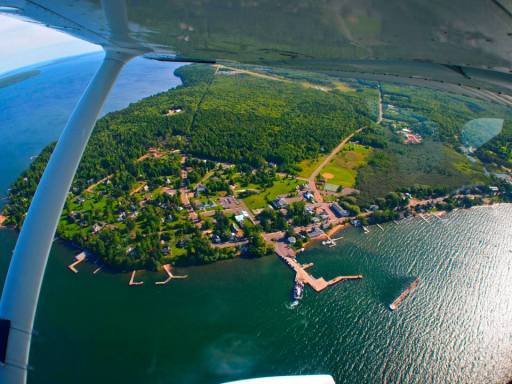
Moon Over Madeline Island

madeline island

Photo courtesy of Captain Bob

Moon Over Madeline Island” is the perfect book to read on a much-needed vacation or staycation.  It’s the first in a series of three, the last of which I haven’t read yet, since I only recently discovered its existence!  Thank goodness I’m doing this month of favorite books.  It has really gotten me back on track with my favorite authors and series.

I really enjoyed flying through this set of books.  Jay Gilbertson does a great job of creating this quirky world, set in small town Wisconsin, and later, on the adorable and enviable Madeline Island on Lake Superior.  For many in the region, living on an island like this is truly the promise land.  As for the book, it’s light, funny and a bit odd.  My favorite part, though, is the characters.  The character development is done so well that sometimes I remember something someone said about cherries or in a hair salon, and I realize that it wasn’t a real person, but instead the words of Eve or Ruby.  If I work hard, I think I can develop Ruby’s snappy personality by 45, that’d be just delightful!

Another reason this book is appealing to me is the midwest loca
tion.  I’m from the midwest (Minnesota!), so some of the comforts of back home come out while I’m reading.  The dish references, the small town talk, even the dialect makes me feel a little warm and cozy  inside–although I might be far away in another state or country.

It just so happens that I am heading to the beach this weekend, so I’d better get to the library and get the third book!  I hope it’s available last minute, otherwise–to Kindle, I go!moon over


Posted by: patriciamar | March 13, 2016

Natalie’s Pick

The Time Between

Review by Natalie Willers


Have you ever felt that moment when you learn about an event in history that makes your heart stop? The younger generations often don’t recognize the gap in their knowledge about what older generations have witnessed; it is only when faced with a startling fact of an elder’s life that the world stops spinning for a second and a momentous impact is made on a young person’s life by that single revelation.  This is what happens to Eleanor Murray in Karen White’s ‘The Time Between’.

I have read vast amounts of books and love most every type of story, but Eleanor’s journey speaks to my heart every time I read this book. Her world is tumultuous and spinning beyond her control. She has lost her dreams and her drive although she spends every day driving a shared junk-pile of a car and being reminded of the dreams she has given up. Her every day is wrought with grief and chained by guilt from her past. Her survival day to day depends on caring for her crippled sister, hiding from her brother-in-law, and sparring with her mother.  When confronted by her intimidating boss to take on more work, Eleanor must decide between surviving and giving up the last bit of herself she holds to a lonely young girl and a staunch old lady. Eleanor’s choice might just prove that she still holds the strength of her younger self to mend another’s heart and, just maybe, her own life in the process.

A southern flare gives an interesting motif to this story while a rippling connection to history teaches the reader important ideas about life and its challenges. While keeping the story at a simple entertaining, reading level, Karen White spins an intricate web of details, choices, and consequences. This is a great read for young adult readers and the eldest generations alike; none of whom will escape the power of Eleanor’s experience.

This story reveals the entire spectrum of human emotion from the powerlessness of depression to the strength of the human soul to overcome.  Every person has reason to connect with Eleanor’s struggles and find inspiration in her courage to face the unknown. Throughout the story, I love every heart stopping moment from harsh criticism to heart-wrenching loss to absolute joy to blissful peace. The book is an excellent reminder that you never know what you’ll find in another soul or the impact that may make on your life. Also, when you’re stuck in the middle, a quick look in the past may remind you of the possibilities of the future.

Posted by: patriciamar | March 12, 2016

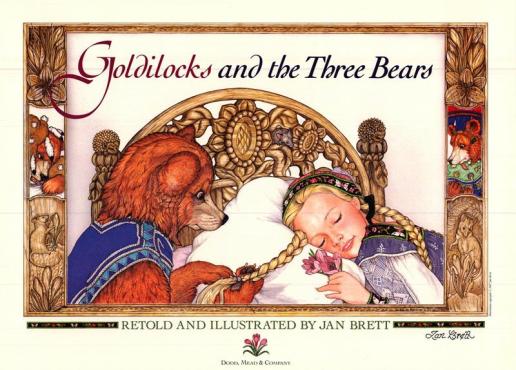
Illustrious Illustrations

JanBrett Goldilocks and the three bears

Tomorrow you will read a review written by my illustrator and sister, Natalie, so in her honor, today I’d like to share a couple of books that I enjoy specifically for their illustrations.

They run the gamut, but thus is the power of art and the makings of a Caldecott Medal.  Of course there is “The Rainbow Fish” and “The Polar Express,” and I mentioned a few especially creative illustrators and/or creators in an earlier post on Alternative Books.  The lovable, “Pecos Bill,” by  Steven Kellogg was brought up in my post on The Life of Pi, I love the way Kellogg recreates tall tales, and the following are a few more of my faves.

First is “The Mitten,” by Jan Brett, a lovely children’s folk tale that is beautifully illustrated.  If you’re not familiar with Jan Brett, what I really like about her books is how she frames nearly every page with a border, which adds more to each page, little

trinkets or symbolism woven right into the edging.

Her others include “Beauty and the Beast,” “The Twelve Days of Christmas” and another favorite of mine, “The Wild Christmas Reindeer.”

On the more recent end of the spectrum is a new book, written by someone I know (My husband’s cousin, Bill Heimbach).  This children’s story is not only about dreaming, but it includes dreamlike illustrations by Angelina Tolentino.  A Whale Who Dreamt of a Snail is a cyclical web of dreams, inspired by Bill’s son, that is really worth checking out.  I have always felt that these illustrations belong on a child’s bedroom wall, framed.  The many blues of the cover (below) are almost too vibrant to put into words.

WhaleCover.jpg

Next is the work of Graeme BaseAnimalia and The Eleventh Hour.  To be honest, I don’t remember what Animalia is about.  Was it just an alphabet book?   It’s raining, so I don’t think today is the day to bike to the library to reread it, but I do remember staring at those illustrationsanamalia_wideweb__470x282,0–the near and the far, all those animals living their lives–and feeling amazed at how life-like the animals were, despite their palaces, libraries and visibly dramatic lives.

When it comes to beautifully illustrated children’s books, the list could go on and on; that’s what I love about them.  For heaven’s sake, even “The Stinky Cheese Man” was well illustrated!

What are a few of your favorites?

Posted by: patriciamar | March 11, 2016

HP & Natalie!

Of course.  Indeed.  I so confirm. I do say. Harry Potter is in my top 31.

I’m also taking a small liberty and including all 7 books, and no-

No!  I will absolutely not force myself to choose a favorite.  I don’t believe in that sort of thing.  It’s a series!  What if you could only read the second one?  You’d never know Edward Cullen as Cedric Diggory! Or the fifth one!? You’d only know Snape as a villain, and you would never know about that cool trick Lily could do with the fish.

Harry Potter is a series that touched a lot of people’s lives.  I’m not exaggerating.  I was a stick in the mud about it, and later declared I would not read a word until the whole series was out.  I’m so glad that I did, even though I missed a lot of the excitement, because I am not great at waiting. I couldn’t have handled it and what could I have done about it? A big, fat nothing… I would’ve been a wreck! I always find my way to Downton Abbey before it reaches the states, for example.

Back to the life-changing world of Harry Potter.

I read Harry Potter while I was in Indonesia. If you don’t know, the weather in Indonesia is HOT.  It’s humid, it’s hot, and there is no air conditioning, at least not in the little room on Alor where we were staying.  Sometimes we would walk to the one ATM in town just to get a breath of A/C!  I’m not even kidding!   In four and a half weeks, I read the first four books (yes, easily), and then I had to go in search of the fifth.  I found, it, on Bali, and I got to read that one too. I had to wait until I got back to Holland to read the last two. (Ohhhh! The pain!)

My little sister had read the first book 17 times by the time the last book was published.  I’ll double check with her to make sure.  Natalie?  By the way, this is the same little sister (now in her 20s)  that made all of the sketches for the stories in “Case by Case Basis.”  She was a wonder to work with, mostly because she always responds to emails.  How is that?  Right now, I have more than 3,000 unread messages in my inbox.  What? That’s not normal? I don’t think they’re important.  I usually get to the important ones.  But I digress.

In the past there has been some quarreling over whether its better to read one thing (like HP) more than once, or over and over again, or if it’s better to read a vast, diverse number of works (like every Goosebumps book? Every Baby-sitter’s Club?)

I agree with the idea that HP single handedly increased the number of readers, male and female, in the world.  Kids jumped on board, they read, and they loved it, and that makes readers.

I don’t care if you read the same book over and over again for your entire life.  You’re still reading… There are many worse things you could be doing.

I’d love to see some long-term research done on this, and I bet my ass there will be.  Because Harry Potter lovers don’t die, they just get older, and when they reach an age at which they have the time and energy and utility to do a study on how Harry Potter increased literacy for an entire generation, they’ll do it.

A question for you: What’s your favorite Harry Potter Book?  I think numbers 1, 4,5 and 7 are my favorites 🙂

Posted by: patriciamar | March 9, 2016

The Mapmaker’s Dream

First of all, is this the best title ever, or what?

This is a short book that I’d almost guarantee you have never seen or heard of. I’ve had it forever, and it may, in fact, have made the trek to Mexico with me, or maybe even Holland. It’s small and portable and because of that, and it’s loveability (new word!) it has and always will have a place on my shelf.

Did I mention that I’ve never finished it?

The book is a sort of Italian monk’s journal. He is a mapmaker who only receives his information from travellers. He meets and talks to poeple from all over and hears their stories, taking them down slowly and carefully as he makes his maps.

Sounds romantic doesn’t it?

That’s what I thought. Give it a try.


Posted by: patriciamar | March 8, 2016

Another World is Possible If

This non-fiction book was required reading for a Global Studies course at the University of Minnesota during my undergrad. That being said, it’s obviously a bit outdated at this point.  Nevertheless, it’s still an important book for me. Author Susan George presents a picture of a possible world, (not utopian, mind you,) but a world that may be within reach if we can manage to change some of the currently messed up parts.  “Another World is Possible If” is relatively brief and very readable.  This is noteworthy because I read it during the period of my life when I was first, first studying International Politics and simultaneously discovering just how little I knew about the rest of the world — sad, but true.

I continued taking courses on international relations, international politics, different forms of governance and social programs, and although I could have easily been intimidated by the inundation of new information, I instead sucked it all in.

Along with the aforementioned course, I read “The End of Poverty” (the debated Jeffrey Sachs) and “Confessions of an Economic Hitman,” (John Perkins), both very interesting reads if changing the world is something you’d be on board with.  Currently, I am listening to the “Divide” audiobook, another work that is definitely worth a read.  It was the University of California, Davis Campus Community Book Project in 2015-2016.

Hmm, this post took me a while to get to, but it has been a nice experience, thinking back on the courses and instructors I had during such an exciting time. It’s nice being a U of M alumnus, and my brain feels good!  I should look back on a few more books from my Poli Sci days.  Brain stimulation is always a good thing.  Yesterday afternoon I helped a young Korean tutee write an argumentative essay on the best period of life.  She argued, quite well I might add, that the college years were the best.  I think she has a point!

world-map-black

Posted by: patriciamar | March 7, 2016

The Life of Pi

I just love sloths. If you’ve read “The Life of Pi,” you might not remember anything about sloths. Sloths, in fact, have virtually nothing to do with this book. However, I have a very fond memory of a paragraph in this book about sloths that is forever etched into my smile. I often read it outloud to my husband and laugh. We both read the book for the first time in Guadalajara, Mexico, at a point when we read kind of a lot, due to the lack of internet access at the time. It was a nice period actually.

Well, I might as well insert it here. A little bit of info on sloths.

Ha! So slow, they are!  The best time to read it is when you are overly tired and in the mood for something ridiculous.  Keep in mind that the boy in the book studies religion and zoology.  His final project was on the sloth.

 “My zoology thesis was a functional analysis of the thyroid gland of the three-toed sloth.  I chose the sloth because its demeanour- calm, quiet, and introspective- did something to soothe my shattered self.  It is a highly intriguing creature.  Its only real habit is indolence.  It sleeps or rests on average twenty hours a day.  Our team tested the sleep habits of five wild three-toed sloths by placing on their heads, in the early evening after they had fallen asleep, bright red plastic dishes filled with water.  We found them still in place late the next morning, the water of the dishes swarming with insects.  The sloth is at its busiest at sunset, using the word busy here in the most relaxed sense.  It moves along the bough of a tress in its characteristic upside-down position at the speed of roughly 400 metres an hour.  On the ground, it crawls to its next tree at the rate of 250 metres an hour, when motivated, which is 440 times slower than a motivated cheetah.  Unmotivated, it covers four to five meters in an hour.
The three-toed sloth is not well informed about the outside world.  On a scale of 2 to 10, where 2 represents unusual dullness and 10 extreme acuity, Beebe (1926) gave the sloth´s senses of taste, touch, sight and hearing a rate of 2, and its sense of smell a rating of 3.  If you come upon a sleeping sloth in the wild, two or three nudges should suffice to awaken it. It will then look sleepily in every direction but yours.  Why it should look about is uncertain since the sloth sees everything in a magoo-like blur.  As for hearing, the sloth is not so much deaf as uninterested in sound.  Beebe reported that firing guns next to sleeping or feeding sloths elicited little reaction.  And the sloth´s slightly better sense of smell should not be overestimated.  They are said to be able to sniff and avoid decayed branches, but Bullock (1968) reported that sloths fall to the ground clinging to decayed branches ‘often.'”
inhabitants-npc-sloth
-_-_-_-_-
Maybe you won’t quite appreciate that right away – but let me tell you – after 3 or four times of reading it and realizing how ridiculously slow this animal moves, you will soon understand how it can put the joy back into life on a bad day.
Another reason that I liked “The Life of Pi” is the strange line it draws between reality, or the possibility of reality, and a nice tall tale. I enjoy reading books that make me question their origin.

Did Yann Martel spend a portion of his life on a dinghy? Did he ever train a tiger? Did he adopt sloths in his spare time?


A boy on a boat? Seems plausible enough for me. But the rest? I love it. makes me want to read Pecos Bill.

There’s also poop in a cup.

…Yeah, weird, I know.

I haven’t had a chance to read The High Mountains of Portugal. Have you? And if you have, thoughts?

« Newer Posts - Older Posts »

Categories